About Svalbard
About Svalbard
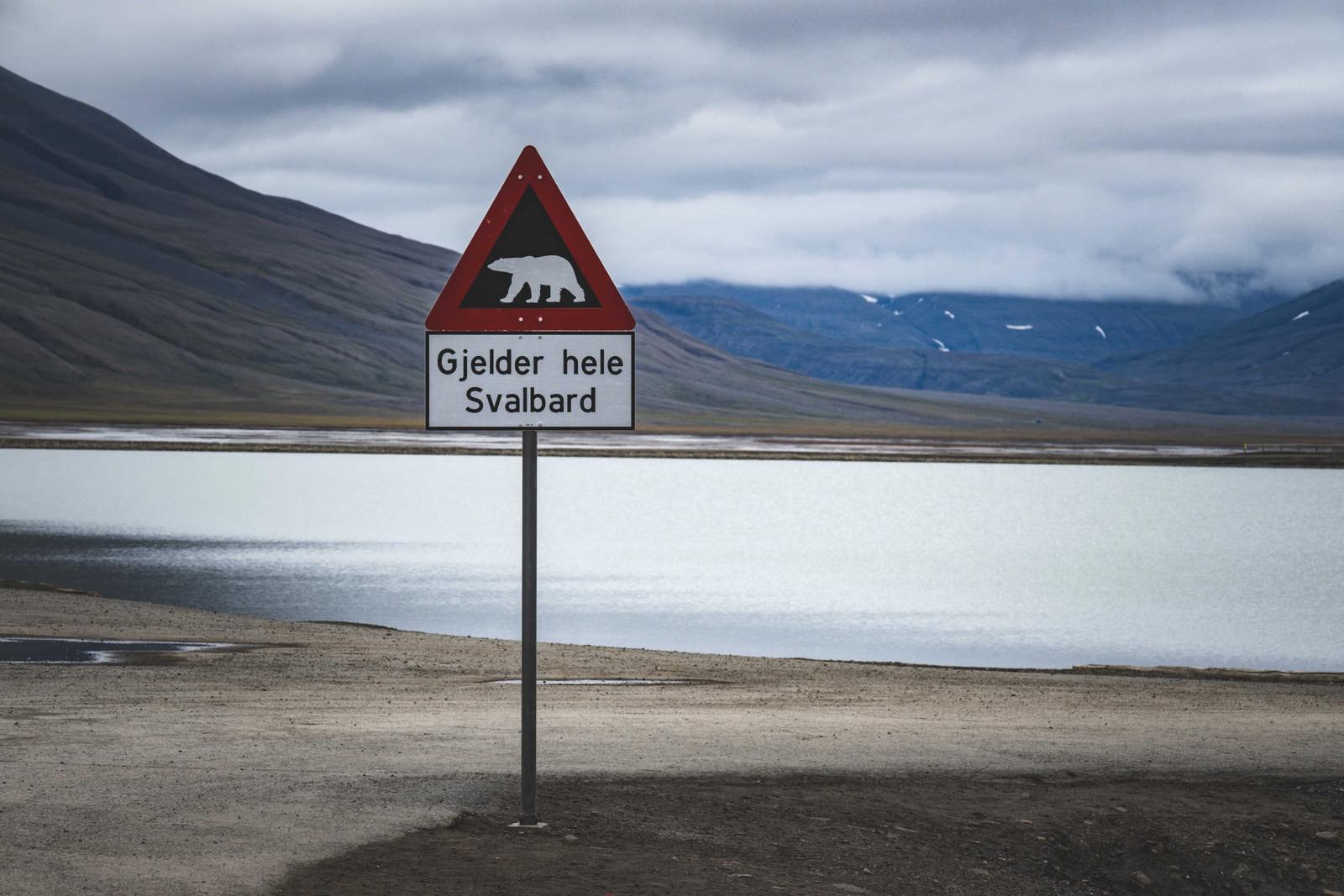
Polar bear
There is a very real danger of running into polar bears in Svalbard.
Polar bears live all over the archipelago and you can run into one anywhere, all year round. The polar bear is one of the world’s largest predators, and is dangerous to humans. You are required by law to bring your own intimidation aids when moving around outside the built-up areas. You also need firearms; a .308 Win calibre rifle or higher. You need to know how to use both your intimidation measures and weapon.
The most important thing is to avoid situations with polar bears that may turn out to be critical for you or the polar bear.
Always keep at a safe distance from polar bears, both on land and at sea. They are good swimmers and can run up to 8 meters per second (more than 30 km/h) over short distances. Please be aware that polar bears can destroy equipment such as kayaks, rubber boats and tents.
Rabies exists in Svalbard, so dead animals must not be touched. Avoid animals that are acting strangely, are especially aggressive, social or show signs of disease. Such animals must be reported to the Governor.
Laws and regulations Svalbard is a part of the Kingdom of Norway and, in most cases, the same laws and regulations apply here as on the mainland. The speed limit for snowmo biles in the terrain is 80 km/h. The speed limit along the riverbed in Longyearbyen is 50 km/h. In all other areas of Longyearbyen, Barentsburg, Pyramiden and Ny-Ålesund, both on and off road, the speed limit for snowmobiles is a maximum of 30 km/h. The regulations for blood-alcohol limit when riding a snowmobile are the same as for cars (0.2 ‰). The police carry out regular blood-alcohol checks on snow mobile riders, both in the built-up areas and in the field. Wearing a helmet when riding a snowmobile is required by law. In order to legally ride a snowmobile, you need to be able to provide a valid driver’s license.
Frostbite Frostbite can occur very suddenly. Your face, fingers and toes are the most vulnerable to frostbite. The initial stages of frostbite will give you a feeling of numbness or a stabbing cold feeling in your skin. The pain disappears when frostbite has set in. The skin turns white (white spots). Frostbite is treated by carefully heating up the frostbitten area. Left untreated, a superficial frostbite can develop into a more serious injury. Act immediately if you feel or see symptoms of frostbite, and check each other for white spots
Weather conditions The greatest challenge in Svalbard may be the at times extreme and changing weather conditions. Svalbard is located in a zone where cold air from the north and hot air from the south meet. This means that the weather can change very suddenly. In the summer, this can cause a thick fog. In addition to white-outs, intense cold combined with wind is very challenging in the winter. The apparent temperature (felt air temperature) can be much lower than what the thermometer tells you (see the table). The average temperature during the summer is approx. 5 degrees. In the winter, temperatures can fall to minus 30 degrees. Weather conditions may cause delays and equipment malfunction. This means that you have to plan your trip with gener ous time margins. White-out and flat light Light and weather conditions can keep you from being able to distinguish topographical features in the terrain or the transition between land, sea and sky. You lose all visibility and further travel is obstructed. White-outs occur when it is intensely cloudy and snowy, or when strong winds whirl up snow from the ground (snow flurries).
Facts:
Permafrost The ground in Svalbard is permanently frozen (perma frost). Only the top layer (approx. 1 meter) defrosts in the summer. This prevents water from running further down into the ground, and can cause a very wet terrain.
The glaciers Approx. 60 per cent of Svalbard is covered by ice. Traffic on glaciers requires specific skills and knowledge, as well as suitable equipment.
Snow and avalanche risk Svalbard is exposed for much wind and snow is transported on the wind. Certain areas can therefore get large amounts of snow. There may be incidents of local heavy snowfalls. These condi tions, combined with brief substantial temperature variations and strong winds will at times cause significant avalanche risk. Several of the popular routes from Longyearbyen run through areas of significant avalanche danger under such condi tions. Be especially wary after periods of snowfall, wind and large temperature variations. Avoid steep mountain sides with large amounts of snow, narrow valleys and mountain sides with overhanging snow drifts. Be especially cautious during the polar night, as the avalanche risk is difficult to assess. Always remember to bring a sender/receiver, shov el and an avalanche probe (ASSA). Even relatively small avalanches can be fatal
Snowmobile:
Travelling by snowmobile. You need a driver’s license to operate a snowmobile, and you are required by law to wear a helmet. Snowmobile riding causes many accidents. Although the vehicle seems relatively easy to operate on flat terrain, it can be difficult to manoeuvre at high speeds and in uneven and sloping terrain. The snowmobile can take you very far in a short space of time. When you have ridden a snowmobile for one hour, you will have at least a day’s walk back to your starting poin
The ever changing weather and terrain in Svalbard are the biggest challenges for snowmobile riders. Be aware that flat-light, white-outs, fog, bad weather and icy goggles/visor can make it very difficult to see terrain details. Due to the weather, the terrain,
Wind holes are created by the wind, and snowdrifts drift over the tracks. Valleys made by streams can also be very difficult to spot, and can therefore cause accidents. Many snowmobile accidents are caused by the riders pushing the limits for what they can handle and lacking the necessary equipment and knowledge. If the weather and vis
On the town:
Road safety There are a relatively large number of vehicles in the built-up areas in Svalbard. During the dark season with bad visibility and slippery roads, it is important to use reflectors. Bicycle lights are also necessary. As a driver in Longyearbyen, you need to be especially wary of pedestrians. Longyearbyen is a small town, but there can be activity here 24 hours a day, and both animals and people travel along all roads. Please be especially aware that there are many children in Longyearbyen. There are sledging slopes, ski slopes, nursery schools and schools close to the roads. Snowmobile riders are required to take special care as the snowmobile can be difficult to manoeuvre when crossing roads or travelling along them. Snowmobile riders are obligated to give right of way to all other vehicles and pedestrians
Polar bears in the built-up areas Polar bears will from time to time be observed in the local communities. This must be taken into consideration, especially during the dark season when visibility is limited. The Governor must be notified immediately of any polar bears sightings in or around the built-up areas. Be humble towards the forces of nature in Svalbard. Take responsibility for your own safety. Have a nice and safe stay!