
Harmful Algal Bloom monitoring
Harmful algal blooms (HABs) and Sargassum seaweed can be monitored through satellite remote sensing.
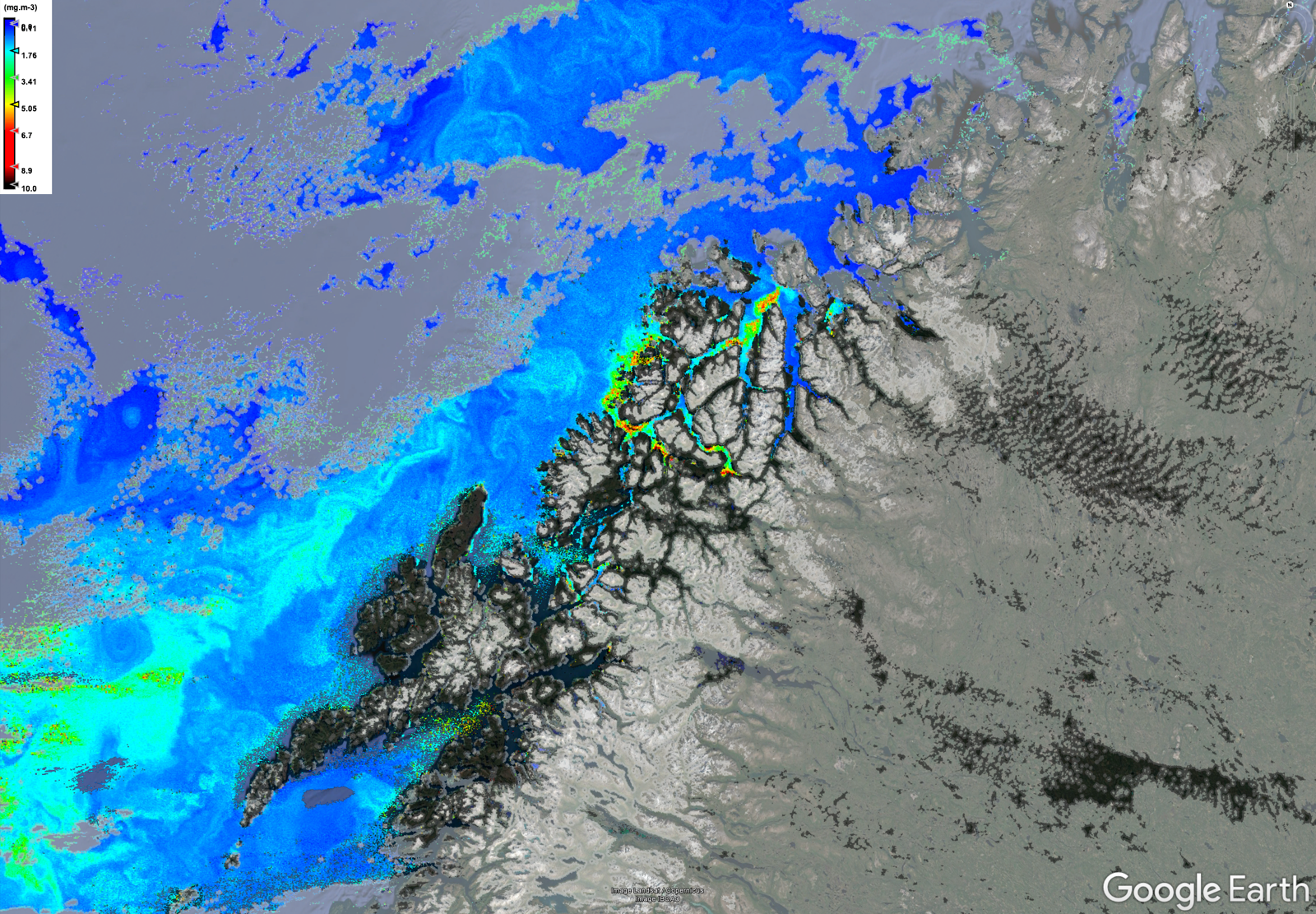
Algae, in many forms, poses a direct risk to conventional fishing, aquaculture, tourism and infrastructure. For example, in 2020 a massive toxic phytoplankton bloom in Norway accounted for around NOK 3 billion in revenue and job losses in the fishing and aquaculture industries.
Fortunately, satellite remote sensing offers possibilities for algal bloom monitoring. In the coming years, new hyperspectral satellites will further enhance the monitoring capabilities and help to distinguish harmful algal blooms from non-harmful ones.
Key Facts about detecting HABs with existing satellite assets:
In most areas of the world, the required satellite coverage is available 23-24 days of each month.
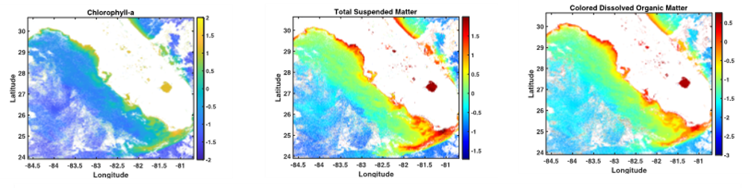
- The chlorophyll a product from dedicated optical satellites, giving a proxy for total phytoplankton biomass, enables detecting and monitoring algal blooms.
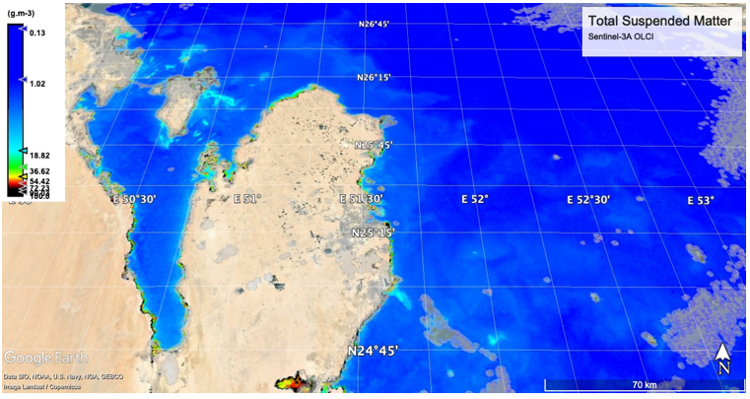
- Further environmental variables, such as, Total Suspended Matter (TSM), Colored Dissolved Organic Matter (CDOM) or Sea Surface temperature (SST), can be used for context.
- Specific HAB indices and machine learning methods can be applied to further study and distinguish the bloom type.
Detection of Red Tide Algae, and when hyperspectral satellite capacity allows, other types of HABs, could be of interest to:
-
Regulators or environmental groups wanting to monitor, track and identify the source of Red Tide Algae.
-
Operators of fisheries and aquaculture facilities who are impacted by Red Tide Algae outbreaks and can take action to protect their stocks based on KSAT’s reporting.
-
Operators of key infrastructure, such as desalinization plants, which would be negatively impacted by Red Tide Algae ingestion.
-
Stakeholders of coastal tourism infrastructure in Red Tide Algae prone areas.