With decades of experience in satellite operations, maritime surveillance, and Earth Observation services, Kongsberg Satellite Services (KSAT) has built a unique capability to turn satellite data into actionable insights.
Combining this experience with complementary expertise from its chosen partners from Norway, the Maldives, Netherlands, Canada, Germany, South Korea and Greece, KSAT will now lead and coordinate the EC Horizon Europe project Pollution Observation from Space: Environmental Imagery for Detections in the Oceans & Nearshore, known as POSEIDON.
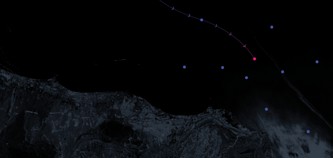
The project intends to use optical and radar-based satellite technology for improving services for identifying oil spills, detecting oil spills in sea ice conditions and detecting and identifying chemicals, sewage, garbage, emissions and other pollutants released by ships at sea to better support monitoring activities in maritime areas which are increasingly under pressure from pollution and increased vessel traffic.
– POSEIDON demonstrates how international collaboration can create global value and strengthen partnerships for important environmental topics. KSAT is proud to lead its first EC Horizon Europe project and to have brought together a strong global consortium to address these challenges, building on our collective experiences in maritime surveillance and monitoring and continuously improving the service offerings to all who need it, says Marte Indregard, President and CEO of KSAT.
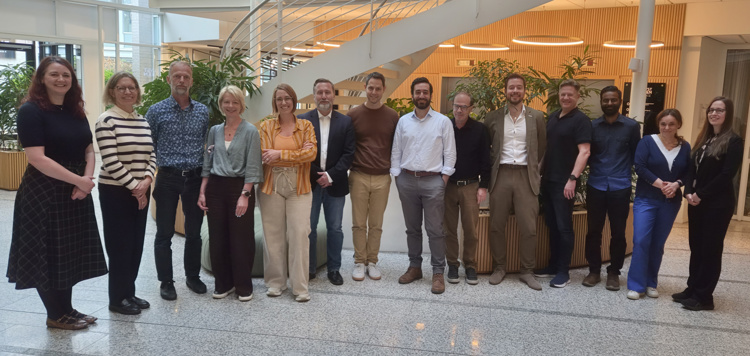
The project brings together a strong collaborative partnership to improve the understanding, awareness and approach to monitoring our maritime areas which are increasingly under pressure from pollution and increased vessel traffic. The combined consortium knowledge and capability across earth observation, communication, in situ measurements and coordination, through a composition of private, public and research institutions, ensures that what is generated in this project brings value to the stakeholders and future commercial users.
– With increased vessel traffic to meet rising transport demands this places pressure on the environment and as such maritime pollution becomes an increasing challenge that needs to be better understood. The objective of POSEIDON is to address these challenges using earth observation with the aim of providing solutions to monitor our oceans that can assist in reducing environmental impact, says Charlotte Bishop, Director of Emerging Products and Services at KSAT.

This project has received funding from the European Union's Horizon Europe research and innovation programme under grant agreement No 101296478.