There is a constraint built into the physics of low Earth orbit that no amount of engineering can fully dissolve. When your satellite is not above a ground station, you wait. That gap is not a failure of operations. It is geometry.
For ten years, KSATlite has made those gaps shorter and those contacts more valuable, 35 stations, 200 antennas, 5,500 daily contacts, a global architecture refined to give every mission the maximum it can take from the minutes it has. But the gap itself has always remained.
Hyper is what KSAT built to close it.
Read the first chapter in our KSATlite series.
The limit that ground alone cannot solve
In a previous chapter of this series, we described physics honestly: orbital mechanics governs when you can communicate with a spacecraft. Station placement reduces the wait. Automation removes the friction after the pass. But between contacts, over the ocean, over a continent with no antenna beneath it, data sits onboard. Waiting.
For many missions, this is acceptable. For a growing number, it is not.
Read the conversation with GM for Hyper, Edvard Foss
Earth observation operators racing to deliver real-time intelligence. Maritime surveillance platforms tracking fast-moving targets. Defense and dual-use constellations where the value of data collapses if it arrives late. For these missions, the gap between passes is not an operational inconvenience, it is the central problem.
KSATlite had spent a decade solving everything around that gap. Hyper is the decision to solve the gap itself.
Read the second chapter in our KSATlite series.
Orbiting ground stations
The concept behind Hyper is deliberate in its simplicity: take the capability KSATlite has built on the ground and bring it into orbit.
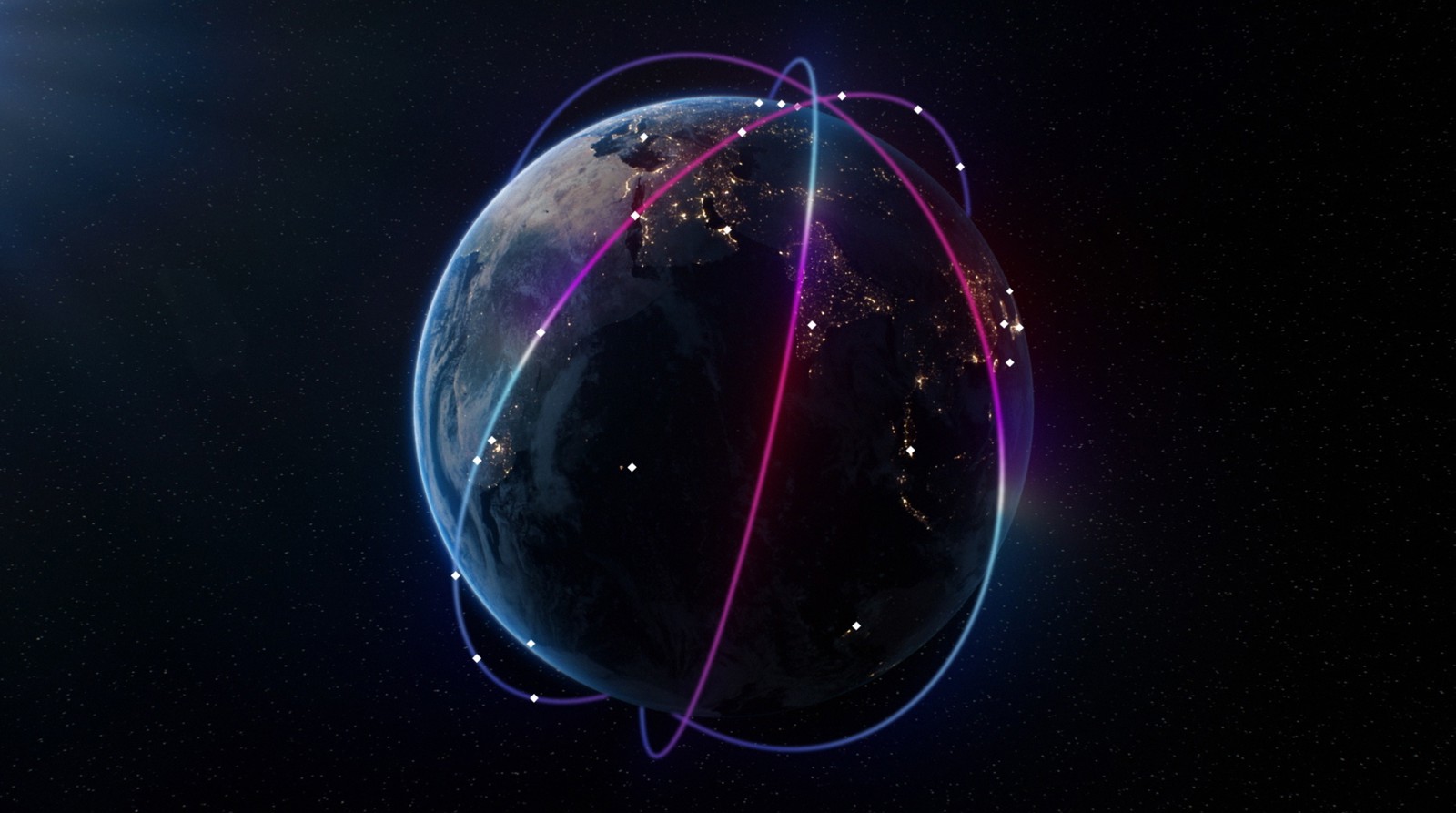
Hyper satellites operate in LEO, functioning like ground stations in space. When a customer satellite passes over open ocean or a coverage gap, instead of waiting for the next ground station window, it can offload data to a Hyper relay. That relay routes the data into KSAT’s terrestrial infrastructure, and from there, through the same automation and cloud-delivery architecture that powers 5,500 daily KSATlite contacts.
No custom onboard hardware. No changes to how you operate. If your satellite already works with KSATlite Ka-band or S-band services, it works with Hyper.
This is not a parallel service. It is a precision augmentation layer, one that fills the latency gaps the ground network cannot reach, without displacing the ground network that handles everything else.
Read the third chapter in our KSATlite series.
Ka-band, high throughput, built for data.
Previous generations of in-orbit relay infrastructures were designed primarily for telemetry, tracking, and command, narrow-band pipes suited to keeping satellites healthy, not to moving mission data fast.
Hyper is built differently. Operating in Ka-band, the constellation is optimized for high-throughput data delivery: the kind of volume that growing EO constellations, synthetic aperture radar missions, and intelligence-focused spacecraft generate every orbit. The architecture is designed for speed and reliability at scale, not as an emergency backup, but as a permanent layer of the network that activates whenever the geometry demands it.
The result is a service that covers the full chain. From ground station contact, through the relay layer in orbit, to cloud delivery, one integrated operation, one operational surface, one provider.
Read the fourth chapter in out KSATlite series
From Hyper to Hyperion: the demonstration pathfinder mission
KSAT does not deploy new infrastructure without validating it against the same operational standards the ground network has built over a decade. The Hyperion mission is that validation.
Announced at the SmallSat Symposium in February 2026, Hyperion will be the first Hyper relay satellites in orbit, with a launch contract signed with SpaceX, targeting late 2027. The mission will demonstrate end-to-end data paths, validate relay compatibility with KSATlite’s operational model, and support early customer testing campaigns before the full Hyper service scales globally.
For customers, Hyperion is the opportunity to explore what low-latency relay access means for their missions, without rebuilding their workflows to get there.
Augmentation, not replacement
The principle that defined KSATlite from its earliest days, accept the physics, remove the friction, keep the system usable, carries directly into Hyper.
When a ground station is available, data flows through KSAT’s terrestrial network as normal. No added cost, no switching logic to manage. Hyper activates when the ground cannot serve you: over oceans, over unserved regions, wherever real-time delivery is the mission requirement.
What Hyper adds to the network, and therefore to KSATlite, is optionality. More routing paths. Higher availability. The ability to deliver mission-critical data to any point on Earth without waiting for geometry to cooperate.
Ten years ago, KSATlite extended KSAT’s polar backbone into a global ground network. Hyper extends that network into orbit.
“Hyper combines the best of both worlds, space and ground, into a single integrated service. With no need for custom onboard hardware, customers gain low-latency, high-reliability access to their data through the same KSAT infrastructure they already trust.”
— Edvard Foss, General Manager, Hyper